General Powell reporting from the front lines
General Powell here, sharing intelligence with my fellow warriors. As Tupac said, keep ya head up. This is war, mano a mano, hand-to-hand combat with fruit flies, and they have one mission in my kitchen: to be fruitful and multiply. They take that commandment more seriously than most people I know. They have the banana holder, the fruit dish, the kitchen table, the trash can, and if I let them, they would take the living room too.
When I saw the number of reviews on some of these products on Amazon, it was nice to know I was not the only one at war. This is the only house I have ever had this problem in. Whether you are a brand-new fruit fly warrior or a grizzled veteran like me, welcome. By the end of this article you will be informed, equipped, and ready to win the daily battle. Sword on the shoulders. You will leave here a Fruit Fly Fighting Knight.
My top pick for easy Fruit Fly Elimation: Zevo Flying Insect Trap. Amazing ‘ After Pictures’ Below ‘
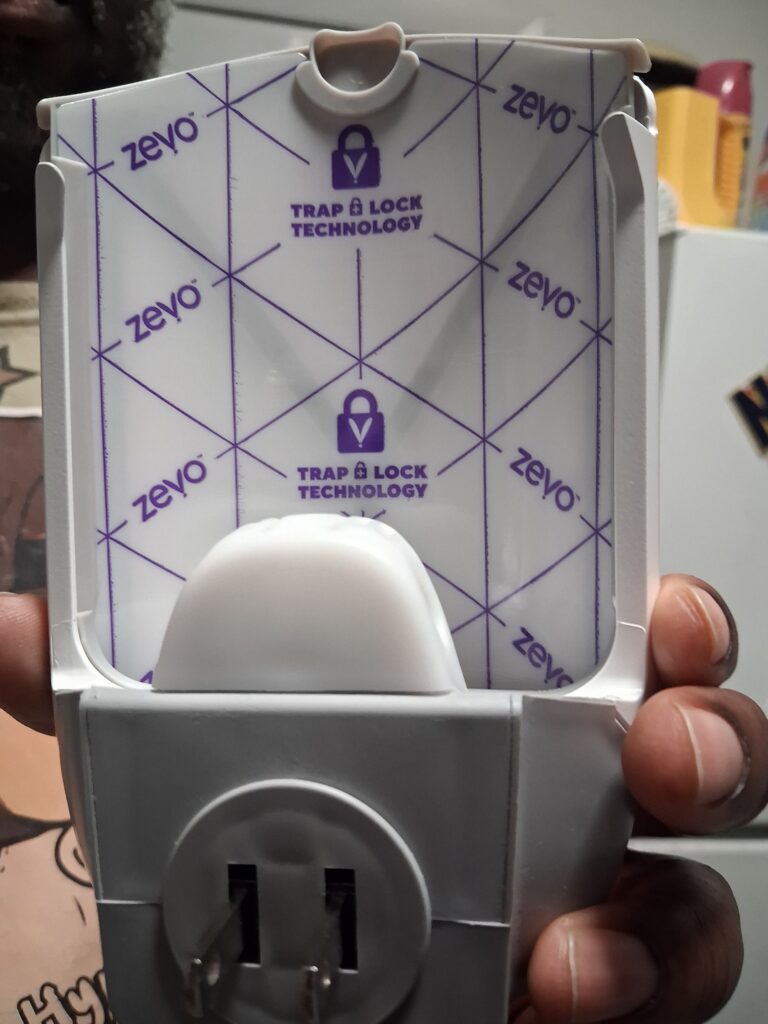
My Top Two Fruit Fly Killers (skip ahead and go get them) {#top-two}
Above is the Before picture and here is the After pictures about 3 weeks apart. I would say most of the damage was done in about two weeks. And I did not know I could get a refill. I was late and a little slow to catch on. I will update you on what happened after this in another blog. But we were very pleased and astonished!!! Yet a little grossed out to say the least.
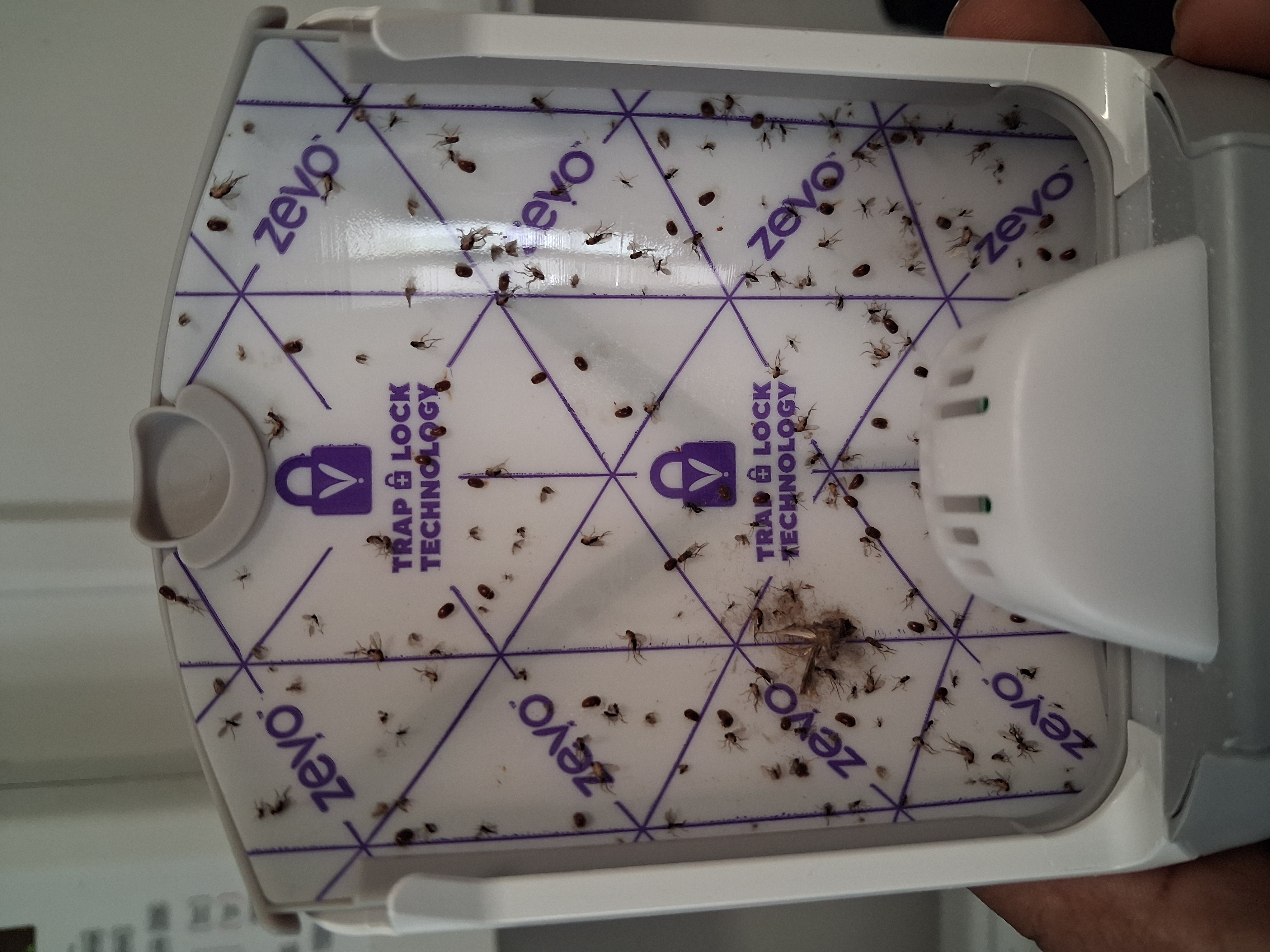
- Zevo Flying Insect Trap (plug-in base + refill) — the most effective single weapon of the whole season. Thirty seconds to set up, works in 24 hours. Buy it. Check price on Amazon https://link.amazon/B0jfE5mX7
- Buzbug LED Bug Zapper (indoor/outdoor, MO008C) — the closer. Roughly 10 kills a day once it went up, and the pops are satisfying. Buy it. Check price on Amazon https://link.amazon/B0bk1dXi8
The Fruit Flies Like to have Nighty Night Dates with the BuzBug Ha ha !! Goodnight sweetheart indeed
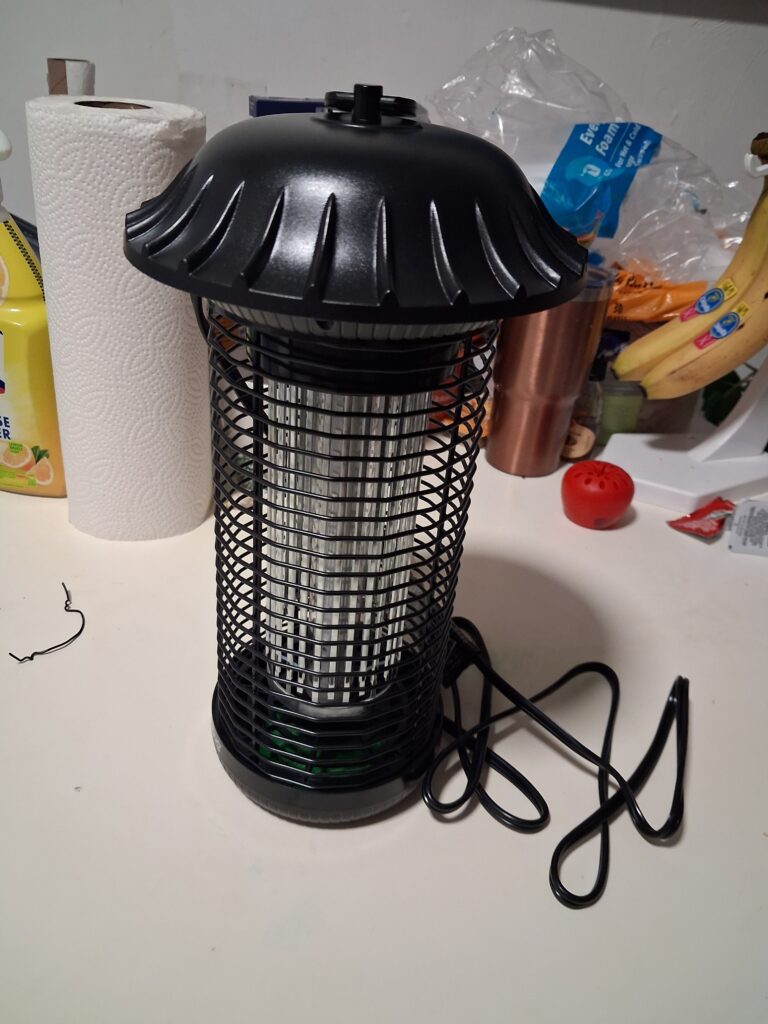
Together these two took my fruit fly population down about 95% in roughly two weeks. Everything else I tried, the Raid Fly Stick, the PIC trap, the Terro lure, is reviewed below with a Buy It or Skip It call. But if you only have money for two things, these are the two.
Affiliate disclosure: As an Amazon Associate I earn from qualifying purchases. Links marked “affiliate link” in this post are Amazon affiliate links; if you buy through them I earn a small commission at no extra cost to you. Every product here was bought with my own money and tested in my own kitchen.
Why you want to get rid of fruit flies {#why}
The short answer: they are laying eggs in your food, and you cannot see it. A female fruit fly can lay about 500 eggs in her lifetime, and the whole life cycle from egg to adult can finish in about a week. Some pest control sources put the lifetime count as high as 500 to 2,000 eggs, with 30 to 50 eggs a day and eggs that hatch in as little as 12 hours.
Do the math. One pregnant female lands on your banana holder on a Monday. By the next Monday her first kids are adults. Two weeks later you have grandkids, and they all got the same commandment: be fruitful and multiply. That is why it feels like they appear out of nowhere. They did not appear. They were born in your kitchen.
The eggs are tiny, about 0.5 mm long, yellow, shaped like a grain of rice, and laid right at the surface of fermenting food. The good news from the University of Kentucky: because the larvae feed near the surface, you can cut away the damaged part of a fruit and keep the rest. The bad news: they do not need fruit. A moist film of fermenting anything will do. That means your drain, your garbage disposal, the empty beer can in the recycling bin, the mop head, and the dish rag.
Three reasons to go to war:
- Eggs and larvae end up in food you were going to eat. You will not see them.
- They walk on your toothbrush. Fruit flies move from the trash can to dishes, flatware, glasses, and even toothbrushes.
- A small problem becomes a big problem in days, not months. The population curve is exponential, so every week you wait costs you more than the week before.
Do fruit flies carry disease? {#disease}
Yes. Not the way mosquitoes carry malaria, but as a delivery truck for bacteria. A 2018 study in the Journal of Food Protection by scientists at Ecolab showed that fruit flies can transfer E. coli, Salmonella, and Listeria from a contaminated source to clean surfaces and to ready-to-eat food. On average, one fruit fly carried about 1,000 foreign bacteria, with a range of 150 to 10,000. The bacteria were found on their legs and feet.
In the lab, a fruit fly picked up roughly 2,900 colony-forming units of E. coli within two hours of landing on a contaminated food source, and the count did not drop over the next 48 hours. Translation: whatever the fly stepped in this morning, it is still carrying tonight when it lands on your cutting board.
Ecolab’s senior scientist said the food safety risk from fruit flies is on par with cockroaches, rodents, and house flies. Their field data shows fruit flies are present in more than half of North American restaurants. The CDC estimates foodborne illness hits about 48 million Americans a year, 1 in 6, with 128,000 hospitalized and 3,000 deaths. Nobody is blaming all of that on fruit flies. But a kitchen full of them is one more road for bacteria to travel.
Do they bite? No. Fruit flies have no biting mouthparts. If you see red when you squash one, that is most likely the fly’s own red eye pigment and gut contents (they live on fermenting, often red or brown, mush), not your blood. Still gross. Still a reason to kill them.
What is a fruit fly infestation? {#infestation}
An infestation is when fruit flies are breeding inside your house, not just visiting. Two or three flies around a ripe peach is a visit. Flies in the bathroom, the bedroom, the living room, and the trash can at midnight means a breeding site is established somewhere, and the adults you see are the tip of the iceberg.
Here is the life cycle at room temperature, roughly, according to Insects Limited and the University of Kentucky extension sheet:
| Stage | How long | What it looks like |
|---|---|---|
| Egg | 1–2 days (as fast as 12 hours in heat) | 0.5 mm, yellow, rice-grain shape, laid on fermenting food |
| Larva (maggot) | 4–5 days | 3–4 mm, pale white/yellow, worm-like, feeds at the food surface |
| Pupa | 4–5 days | 3 mm, yellow-brown, often crawls away to a dark, dry crevice |
| Adult | 2–4 weeks, up to ~40–50 days | 1/8 inch (3 mm), red eyes, tan front half, black rear half |
Two things in that table explain why your fight never seems to end. First, the pupae crawl away from the food to pupate, so you can throw out every banana in the house and still get new adults for a week. Second, a female mates on day one and starts laying on day two. If your traps are only killing adults, you are fighting the last generation while the next one is already in the pipe.
That is the rule every exterminator will tell you and I learned the hard way: find and eliminate the breeding site, or no amount of spray will end it. The traps and zappers below are how you win the air war. The trash, the drains, and the fruit bowl are the ground war.
How fruit flies get in the house {#how-they-get-in}
There are two doors, and you probably opened both of them yourself.
Door 1: You carried them in. Infestations usually start with produce that was already carrying eggs, according to the University of Kentucky entomology department. Bananas, tomatoes, melons, grapes, potatoes, onions, anything unrefrigerated from the grocery store or the garden. The eggs are half a millimeter long. You will not see them at the checkout line.
Door 2: They flew in. An adult fruit fly is about 1/8 inch (3 mm). Standard window screens are built to stop house flies and mosquitoes, and many fruit fly species are small enough to pass right through. Add a door propped open while you carry in groceries, a gap under the garage door where the trash can lives, or a torn screen, and you have an open invitation. Kentucky recommends tight-fitting 16-mesh screens (16 openings per inch) to keep adults out.
Once inside, they do not need your fruit bowl. The University of Kentucky lists drains, garbage disposals, empty bottles and cans, trash containers, mops, and cleaning rags as breeding sites. Iowa State adds slow or seldom-used sink, tub, and floor drains with a slime layer above the water line. A single forgotten potato in the back of a closet, or fruit juice spilled under the refrigerator, can breed thousands.
3 tips to prevent fruit fly entry
- Wash and refrigerate produce the day it comes home. Rinse bananas, tomatoes, grapes, and anything soft under running water, then refrigerate what you can and eat the rest within a few days. Cut away bruised or split spots and throw them in a sealed bag, not the open trash. This kills Door 1.
- Upgrade your screens and close the gaps. Check every window and door screen for tears. Swap standard screens for 16-mesh or finer on the windows you open most (kitchen and bathroom). Add a door sweep to the exterior door nearest the trash can, and caulk around pipes and vents. Utah State’s IPM program lists caulking, weather stripping, door sweeps, and screens as the first line of exclusion. This shrinks Door 2.
- Starve the breeding sites every night. Take the trash out at night, rinse the can, and keep a lid on it. Skip the chemical drain cleaners: they attack clogs at the bottom of the pipe, not the slime film above the water line where fruit flies breed, and repeated use corrodes older metal pipes and joints. Instead, scrub the first few inches of the kitchen and bathroom drains with a stiff drain brush, then pour in an enzyme or microbe drain gel that clings to the pipe wall and eats the film overnight (two good ones are reviewed below). Repeat weekly. Wring out and hang mops and rags to dry. Empty and rinse the recycling bin. Kentucky’s test for a suspect drain: tape a clear plastic bag over it overnight. If flies are in the bag in the morning, you found a nursery.
Do those three things and the products below have a lot less to do.
The war diary: five phases of the 2026 campaign {#war-diary}
Background: the 2025 defeat
2025 was the first year I fought fruit flies in this house, and I lost. I bought one product, a Raid Jumbo Fly Stick, and did not know there was a whole industry built around killing these things. By the end of the year they were everywhere. They had won the battle and the war. So in 2026 I made a promise: when they come back, I will be ready.
Phase 1: The amphibious landing (July)
At the first sight of fruit flies in the 2026 season I went for a bigger weapon than the fly stick. I spent about $17 at Food Lion on a PIC trap, three times the money, because I was going to put some cash behind my passion for killing fruit flies. It started slow like most of these products do. I thought I had wasted my money. Then two or three weeks later I looked at it and they were everywhere. It worked.
At the same time my bleach attack was strong and persistent. Kitchen, bedroom, bathroom, wherever I could find them. The first wave gave me a good fight for about a week and then went quiet. I caught them by surprise. I remember standing in the kitchen looking for them and saying, “Kind of missed the little fellows.” Ha ha. I win.
Phase 2: They came back with a vengeance (early September)
About ten days later they were back, and they did not let me forget it. They took key terrain: the kitchen table, the banana holder, the fruit dish, the living room. The PIC trap was working but not good enough. My Clorox bleach spray bottle was my main weapon, shooting them in the kitchen, living room, and bathroom. That phase lasted two to three weeks. They were winning.
Things I noticed about them during this phase: they are smart, persistent, and antagonistic. They hold grudges. And there are certain things they just cannot resist. Oh, sorry, I was talking about my ex-girlfriend. But I digress.
One fruit fly charged me while I was lining up a shot on another one. Then the one in my sights moved. I think the one that charged me warned the other one. Okay, maybe I have been at this too long. But I believe these fruit flies are diabolical. One morning I swear I saw a sign in the kitchen: “We live here too. Get used to it.”
Phase 3: The big-toy phase (early October)
Time for the heavy artillery. We never actually said that in the Army, but you get the point. On a whim I bought the Zevo Flying Insect Trap. I put it up in the kitchen behind the sink, and within 24 hours I was amazed at how fast it worked. Over the next week my wife and I watched the pad fill up. We had something now. I was too busy with life to order a second pad. That was a mistake, because they kept coming.
Phase 4: Getting more ammo (mid October)
When you have a real infestation you are going to make a real investment. So for the first time I went to Amazon to see what was out there, and I spent a good hour reading reviews from people who were fighting the same war. I settled on two things: the Terro Fruit Fly Trap 4-pack and the Buzbug LED Bug Zapper.
The Terro made sense to me because I already knew fruit flies lose their minds over apple cider. Last year I kept a bottle of my favorite supplement, All in One Tonic (affiliate link) (ginger, honey, cinnamon, turmeric, in an apple cider vinegar base), in my room, and they would swarm the cap trying to get a sip. I did not know at the time that apple cider vinegar was the standard lure in this whole product category. The Buzbug I wanted last year and did not know existed. I put in the order and told my wife, “Honey, don’t worry. Reinforcements are coming, and they will be here tomorrow.”
Phase 5: Weapons of mass fruit fly destruction (late October)
The final counteroffensive. The Terro lures and the Buzbug zapper went up in the kitchen, strategically placed to complement the Zevo. I set the zapper up late at night before bed. A couple of hours in I heard a pop. Did not think much of it. An hour later, pop. Oh, it’s working.
The Terro caught maybe three flies total, but it turned out to be a great lure. The Buzbug was the star of the show, taking out roughly 10 a day. The Zevo kept doing its job on the wall. And I was still shooting stragglers with the bleach bottle. Within about two weeks I would say 95% of the fruit flies were dead. A few are still floating around, maybe coming in through a window or the attic, but the horde is broken.
Unorthodox fruit fly killing methods (General Powell approved)
- Bleach water in a spray bottle, not Raid, in the kitchen and other sensitive areas. My go-to is a Clorox kitchen bleach spray. I use Raid sparingly and only in places farther from food. [IMAGE 6 — the sidearm]
- Shooting fish in a barrel. Pour a sugary drink in a cup and wait. When they land on the rim, fire.
- Old coffee in a cup. They love coffee. Do not ask me why. Set some out and they may just fall in.
- Night patrol. Check the trash can after dark for lurkers. They are vulnerable.
- The wall nap. At night they find a cozy spot on the wall to sleep. Easy targets.
- The feeding frenzy. When they are on something irresistible, they dance and attack it and stop paying attention to you. That is your window.
- Get close before you fire. Their reaction time is fast. Six inches, not two feet.
Their favorites, in my kitchen: bananas, greens, any fruit, trash, coffee, wet and damp spots, and anything with apple cider in it. They will try to squeeze into the refrigerator seal. They are that aggressive.
Every fruit fly killer I used: Buy It or Skip It {#reviews}
Five products, two seasons, one kitchen. Here is the scorecard, then the details. Product names in the table are Amazon affiliate links; as an Amazon Associate I earn from qualifying purchases.
| Product (Amazon affiliate links) | Type | What I paid | Kills/catches in my kitchen | Verdict |
|---|---|---|---|---|
| Zevo Flying Insect Trap | Plug-in light + sticky cartridge | ~$20 | Dozens in the first week; pad filled in ~2 weeks | Buy it |
| Buzbug LED Bug Zapper MO008C | Electric grid zapper | ~$20–30 | ~10 per day | Buy it |
| Terro Fruit Fly Trap 4-pack | Liquid lure trap | ~$11 | ~3 total, but an excellent lure for spraying | Buy it (as a lure) |
| PIC Flying Insect Light Trap (Food Lion) | Plug-in light + sticky refill | ~$17 | Slow start, then loaded after 2–3 weeks | Buy it if you can’t get Zevo |
| Raid Jumbo Fly Stick 2-count | Sticky tube | ~$6–12 | 8–10 in a month | Skip it |
1. Raid Jumbo Fly Stick Insect Trap (2-count) — Skip it
Textbook description: A disposable adhesive fly trap shaped like a tube, about 10.5 inches tall and 2.75 inches across, made by PIC Corporation under the Raid brand. It comes pre-coated with a non-drying glue and a metallic lure pattern, has no bait and no chemicals, and is meant to hang vertically from the included plastic hook with all sides exposed, near the center of the area you want to control. Rated for indoor and outdoor use, up to about 3 months per stick, and the maker claims over 150 flies per stick. Works on house flies, gnats, moths, and fruit flies that happen to land on it. Price: roughly $4 to $6 a stick depending on the retailer.
My take: Ineffective, at least the way I used it. I bought two. The instructions confused me, and I set them on the table instead of hanging them, which I now know is wrong. After about a month there were 8 to 10 flying insects stuck to it. Not enough to dent the population. Low price, low efficiency, great idea, poor execution. There is also nothing that actively draws fruit flies to it, and fruit flies do not fly around at random the way house flies do. They go to food. Save your money and put it toward the products below. If you are going to try one anyway, hang it up.
2. PIC Flying Insect Light Trap (Food Lion) — Buy it if Zevo is sold out
Textbook description: A plug-in flying insect light trap from PIC Corporation, sold as a starter kit with one device and two refills, aimed at house flies, fruit flies, and gnats. Like the Zevo, it uses a light to attract insects to a disposable sticky refill card. No chemicals, no odor, indoor use only, not to be sprayed or submerged. Price at Food Lion: about $17.
My take: This was my first real weapon of 2026, bought at the first sighting in July. It started slow, like most of these products do, and I thought I had wasted my money. Then two or three weeks in, I looked at it and they were everywhere. It worked, just not fast enough to keep up with the breeding. A solid grocery-store option if you need something tonight, but the Zevo outperformed it head to head.
3. Zevo Flying Insect Trap (plug-in base + refill) — Buy it {#zevo}
Textbook description: A plug-in indoor insect trap made by Procter & Gamble. The base plugs into a standard 120V outlet and shines a combination of blue and UV light that mimics the natural light cues flying insects navigate by. Insects fly toward the glow and get stuck on a strong adhesive pad inside a disposable cartridge. The sticky side faces the wall, not the room, so you never see or touch the dead bugs. No insecticides, no odor, no sound. Each cartridge lasts roughly 30 to 45 days depending on bug volume, and the base blinks every six weeks to remind you to check it. Targets house flies, fruit flies, and gnats. Indoor and covered areas only. Variants include a standard, a compact, a twin pack, and a corded Max version for larger rooms. The one knock from reviewers: the blue light is bright, so keep it out of bedrooms. Price: about $20 for a base plus one cartridge; refills sold separately in multi-packs.
My take: The most effective single weapon of this entire war. I put it up behind the kitchen sink in early October and inside 24 hours I was amazed. Over the next week my wife and I watched the pad fill up. Setup takes about 30 seconds, and swapping a cartridge takes about the same. My one mistake was not buying refills at the same time. I will only be buying Zevo refills for the rest of this season. If you buy one thing from this article, buy this and a 3-pack of refills.
4. Terro Fruit Fly Trap (4-pack, 180-day lure supply) — Buy it, but as a lure
Textbook description: A small apple-shaped plastic trap, about 2.25 inches square, made by Terro (Woodstream). You fill it with a non-toxic, food-based liquid lure that smells like apple cider vinegar. Adult fruit flies crawl in through funnel-shaped holes and cannot find their way back out. Each lure lasts up to 45 days, so the 4-pack gives about 180 days of coverage. Built-in windows let you see the catch and the lure level. No electricity, no sprays. Place near fruit bowls, trash cans, sinks, and counters. Over 23,000 Amazon reviews at around 4 stars; price about $11.
My take: I bought it because I already knew fruit flies lose their minds over apple cider, and the Terro lure delivers exactly that smell. As a trap it caught maybe three flies in my kitchen. As a lure it is excellent. So I was not disappointed. It is a $11 fruit fly magnet that tells you where to aim.
5. Buzbug LED Bug Zapper Indoor/Outdoor (MO008C) — Buy it {#buzbug}
Textbook description: An electric insect zapper, not a trap. It uses dual-band UV LEDs at 365nm and 395nm to attract flying insects, which then hit a high-voltage metal grid and die instantly (the maker claims a 0.01-second shock). The LEDs are rated for 25,000 to 50,000 hours, about 10 years of nightly use, and draw very little power. It weighs 1.83 pounds, has a 6.5-foot (2 m) cord, hangs or sits on a table, and is rated for indoor and outdoor use with coverage of up to 2,100 square feet indoors. A protective outer grid keeps fingers out, a removable tray at the bottom collects the dead insects, and a cleaning brush is included. U.S. EPA registered, FCC and CE certified, with a one-year warranty on the unit and two years on the LED tube. Targets mosquitoes, gnats, flies, moths, and wasps. The best time to run it is from dusk to dawn, when insects are most active. Price: about $20 to $30 on Amazon.
My take: The star of the show in the final phase. I set it up late at night in the kitchen. Two hours in, pop. An hour later, pop. Oh, it’s working. I estimate it kills about 10 a day, and you hear every one. It is the closer. The Zevo catches the ones drawn to the wall; the Buzbug electrocutes the ones cruising the room. Between the two, plus the bleach bottle for stragglers, about 95% of the horde is gone.
Bonus: two drain gels for the ground war (next on my list)
Everything above fights the adults in the air. These two go after the nursery in your drain. I have not tested them yet, so no verdict, but both are safe for pipes, septic, and garbage disposals, and both have thousands of reviews from people fighting the same war.
InVade Bio Drain Gel, 1 quart (Rockwell Labs, model IBDC032) — https://link.amazon/B0fUFhzEo
Textbook description: A thick, syrupy gel made of live natural microbes and citrus oil that coats the inside of the drain and digests the organic scum fruit flies and drain flies breed in. Pour 4 ounces around the rim of each drain at night; one quart gives about 8 applications. The maker’s schedule is every other day for the first week, then weekly for maintenance. It will not damage pipes, is safe in septic systems, and is the professional-grade product pest control companies use in restaurant floor drains and soda lines. About 2,500 Amazon reviews at around 4.2 stars; roughly $20–25.
Green Gobbler Fruit Fly Goodbye Drain Treatment, 32 oz (model G8732J) — https://link.amazon/B0j9nthZt
Textbook description: A thick clinging gel that kills fruit, drain, and sewer flies at the source in sinks, showers, floor drains, and garbage disposals. Made with natural citronella and cinnamon oil, which repel flies from the drain after the gel breaks down the buildup. Non-toxic, biodegradable, safe on pipes, made in the USA. Directions are simply pour into the drain and repeat daily until the flies are gone. Over 15,000 Amazon reviews at about 4.1 stars; around $15–17 at hardware stores.
Which one? InVade is the pest-control-industry standard and relies on microbes that keep working between treatments. Green Gobbler is cheaper, easier to find at Home Depot or Walmart, and adds a repellent scent. I am buying one of each for the 2027 season and will report back.
Conclusion: the horde is subdued, not destroyed
First phase, we made an amphibious landing and caught them by surprise. I could hear them asking, “Is this the same guy we whipped in his own house last year?” I wiped them out. Second phase, they came back with a vengeance and took key terrain: the kitchen table, the banana holder, the fruit dish, the living room. Third phase, I bought the big-boy weapon, the Zevo, on a whim, and hit the jackpot. That proved there were products that could actually help. But we were only scratching the surface. They were still being fruitful and multiplying all over the place. Fourth and fifth phase, the Terro and the Buzbug zapper came in and finished most of the job.
So the 2026 season ends with the giant fruit fly horde subdued. They thought we could never take them down. We did. They hung on until the last minute, so I give them credit. A few are still flying around like they pay rent. I will only be buying Zevo refills for the rest of this season, no new products.
But I will see you next year, giant fruit fly horde. And next year you have absolutely no chance. We will be waiting and we will be ready.
What I will do better next year
- Start before I see the first fly. Zevo plugged in by June 1, Buzbug on a timer from dusk to dawn, Terro lures out by the fruit bowl and the trash can.
- More units, more rooms. Zevos, zappers, and lures placed around the house, not just the kitchen.
- Seal the entry points. Check and replace screens, add a door sweep, and find out whether they are coming through the attic.
- Hit the breeding sites weekly. Drain brush and enzyme gel down every drain, trash out every night, recycling rinsed, mops hung to dry.
- Try new fruit fly killers and report back. I am building a short list; [link to the short list goes here].
Have you ever been in a fruit fly infested position? How did you handle it? Did you win, and do you have any tips for the rest of us? Drop them in the comments. Thanks for stopping by.


Leave a Reply